The Myth of the Empty Hour in Nhà Bè
The myth of the empty hour in Nhà Bè reveals how casino-style anticipation colours a commute—and how to make a deliberate choice about the time between stops.
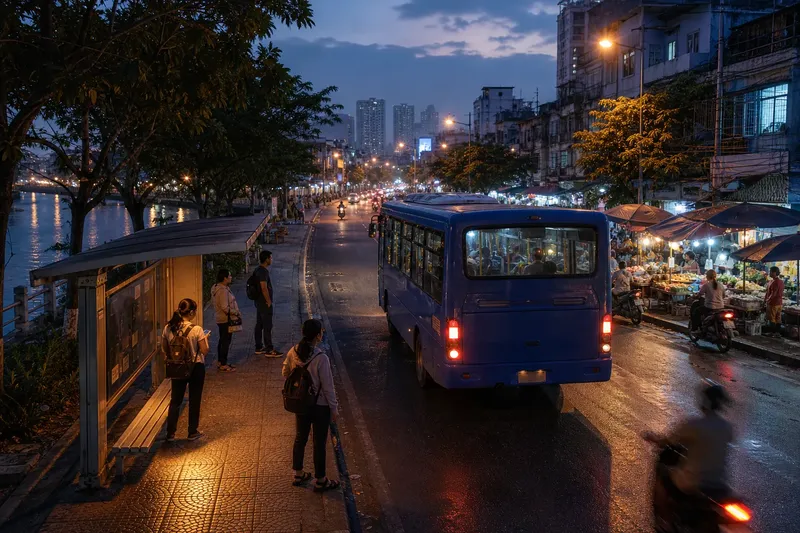
A bus pulls away from a stop in Nhà Bè, and you notice the next one is not due yet. The myth of the empty hour begins in that small gap: it looks blank on a calendar, but a route, a place and the next appointment have already given it a shape.
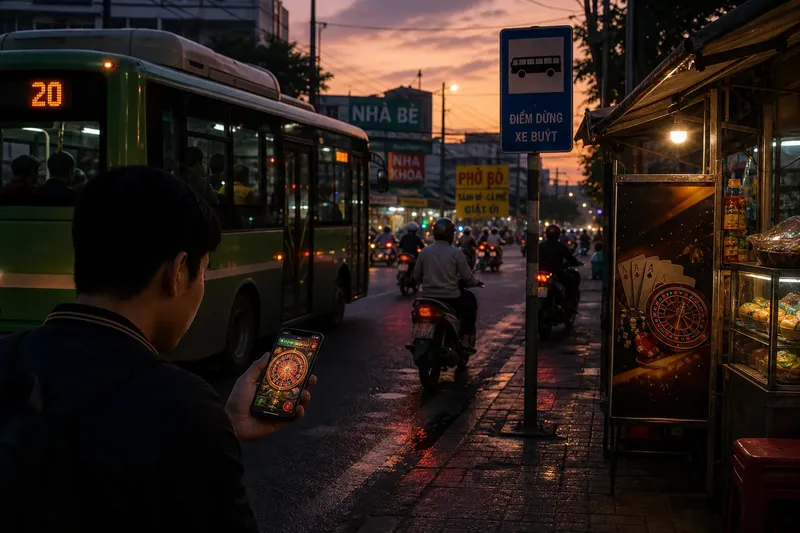
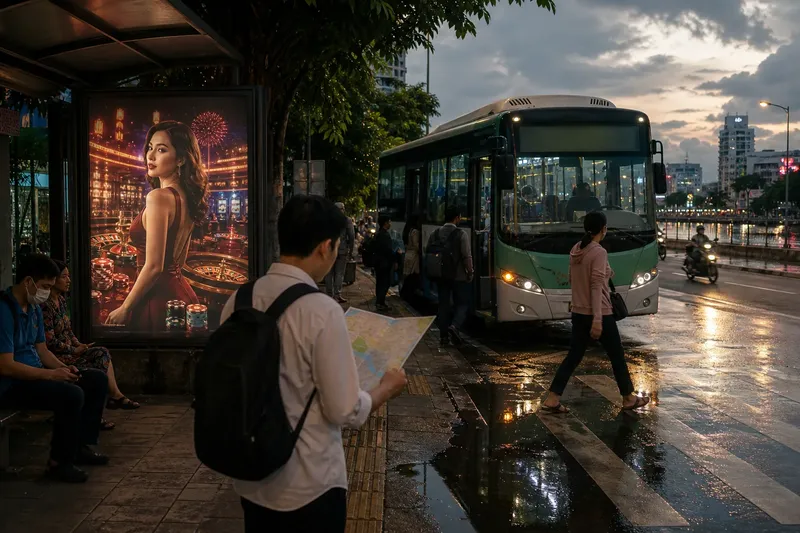
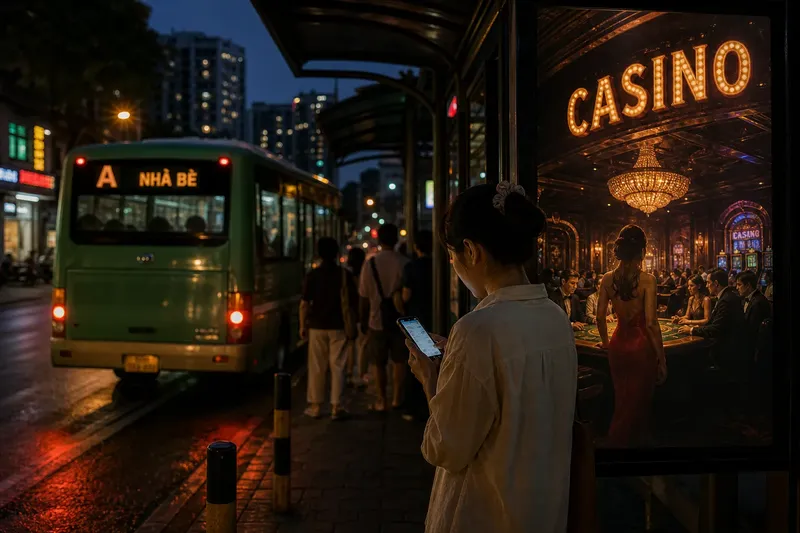
Casino culture offers a way to name one familiar pull: waiting for the next uncertain event. A screen refresh, a passing bus or a message can become another prompt to check what happens next. The comparison is about anticipation, not equivalence; a commute is not a casino, and a bus is not a prize.
How does casino-style anticipation colour a commute?
A journey is made of transitions: leaving one place, reaching another, adjusting to traffic and keeping an appointment in mind. Because the next event is uncertain, attention can keep jumping ahead. Will the bus come? Has the message arrived? Is the crossing clear?
Casino imagery helps describe the repeated urge to seek the next update, but it should not flatten the differences between settings. On a route, the practical question is what deserves your attention now. At a crossing, that may be the movement around you; once you are settled, it may be a message or simply the texture of the wait.
What does the route tell you about the gap?
In Nhà Bè, a pause is part of the journey rather than a separate block of leisure. A market, a bus stop and a familiar stretch between appointments each give the interval a different character. The time is not interchangeable: what you can do depends on what comes before and after it.
Try reading the gap as a transition with a purpose. You might need to remember a meeting point, shift from work to an errand, or give your attention a moment without asking it to produce anything. A pause can be useful because it marks that change, not because it fills every spare minute.
Say you have a hypothetical wait before meeting a friend near a market. Your starting inputs are one message still to send, a crowded pavement and a nearby permitted place to stop. You move to that spot, send the meeting point, then put the phone away; the observable result is that the detail has been sent and the remaining interval is no longer tied to that task. If the spot is unavailable, the trade-off is different: keep the message in mind until you can stop safely, rather than adding screen use to a congested stretch.
How can you decide what the interval is for?
Use the details in front of you to choose, rather than turning every pause into a test of productivity. Each observation points to a decision, with an alternative if the first option does not fit.
- People are pressing past: If the space is crowded, keep moving towards your next destination; if it clears and stopping is permitted, pause without blocking anyone.
- The route needs your attention: If vehicles or foot traffic are changing around you, watch the route; if you are settled away from the flow, choose whether to check one specific detail or leave the phone alone.
- A message has a clear purpose: If one message will settle a practical detail, send it when you can stop; if it invites a longer exchange, defer it and continue with the journey.
- The next leg has a task: If you need a meeting point or travel detail, check that information; if nothing needs to be arranged, let the interval remain unclaimed.
- The place feels uncomfortable: If noise, exposure or local rules make stopping unsuitable, move on; if the place is comfortable and permitted, stay without seeking a special destination.
- Your mind is still carrying the previous activity: If one unresolved detail is blocking the transition, settle that detail when practical; if the list keeps growing, stop adding tasks and return to the journey.
These choices are not a system for squeezing more out of a day. They are a way to notice whether a gap belongs to the route, a small practical task or a pause without an assignment.
What do people ask about the time between stops?
Why do I keep checking my phone during a wait?
An update might arrive at any moment, and checking can feel like a way to meet the uncertainty head-on. If you have a specific reason to check and can do so in a suitable place, check that detail; if not, leave the screen and attend to the route or the pause.
Can a wait be useful if I do nothing?
Yes: a pause can mark the shift between one part of the day and the next. If the place is suitable and no practical need is pressing, let the interval stay open; if it is uncomfortable, choose a different way to continue rather than forcing stillness.
Should I use every gap to catch up?
No. A single message with a clear end may fit a pause, while an expanding list can pull attention away from the journey. If the task keeps growing, leave it for a time when you can give it proper attention.
Does a commute need a special place for a pause?
No. An ordinary permitted spot that fits your route may be enough. If reaching a scenic place complicates the next leg, stay with a suitable place nearby or keep moving.
What is not worth the effort?
It is not worth tracking every spare minute, assigning a ritual to each wait or criticising yourself for checking a message. Those habits can turn a simple transition into another demand. Nor is there much point seeking a scenic destination if it complicates the route.
It is also not useful to treat every notification or passing vehicle as a casino prompt. The comparison has a narrow job: naming the tug of anticipation. After that, the useful question is about the journey itself—what needs your attention, and what can wait?
How does the myth of the empty hour change?
The next time a gap opens in Nhà Bè, notice what lies on either side of it. A meeting, an errand or a change of pace may give it a shape before you make any choice. You can settle one detail, allow the pause to remain open or continue along the route.
The myth of the empty hour loosens when you stop treating every gap as a chance for another update. A commuter’s time is shaped by places and transitions, not just by the next prompt; recognising that gives an ordinary wait a purpose without demanding that it become productive.