How Casino Culture Travels Along Nhà Bè’s Commuter Routes
Explore how casino culture reaches Nhà Bè through screens, street talk and commuter journeys, while keeping entertainment separate from everyday travel.
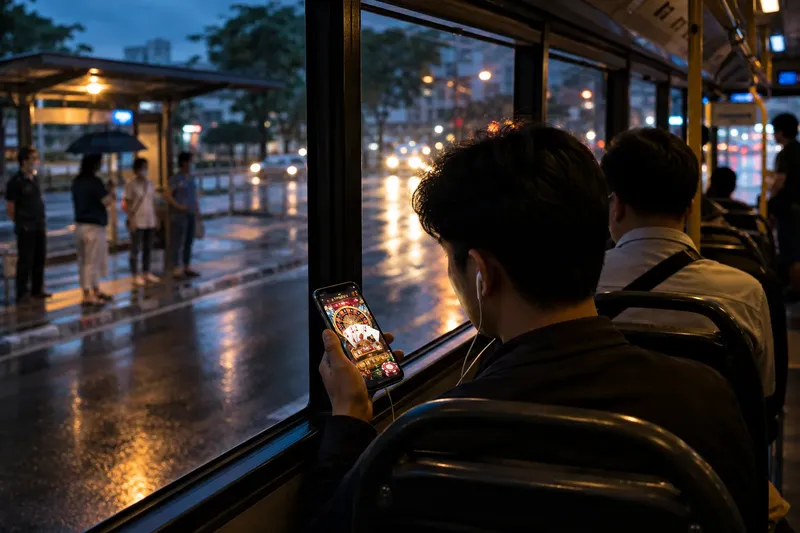
A phone screen glows above a Nhà Bè bus seat: a casino advert, a game clip, a message from a friend. The journey keeps moving past wet pavements and familiar stops, while the casino idea travels in a different way—through images, conversation and the habits people carry between home, work and leisure.
That contrast is useful. Nhà Bè’s commuter routes are ordinary shared spaces, not casino floors; looking at how casino culture reaches them means noticing the media and conversations that circulate, rather than pretending a bus ride is a gambling venue.
How does casino culture enter an ordinary commute?
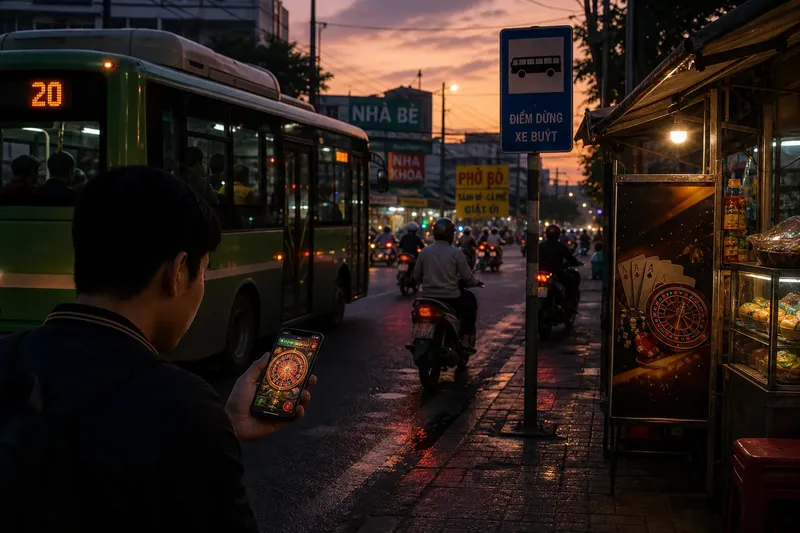
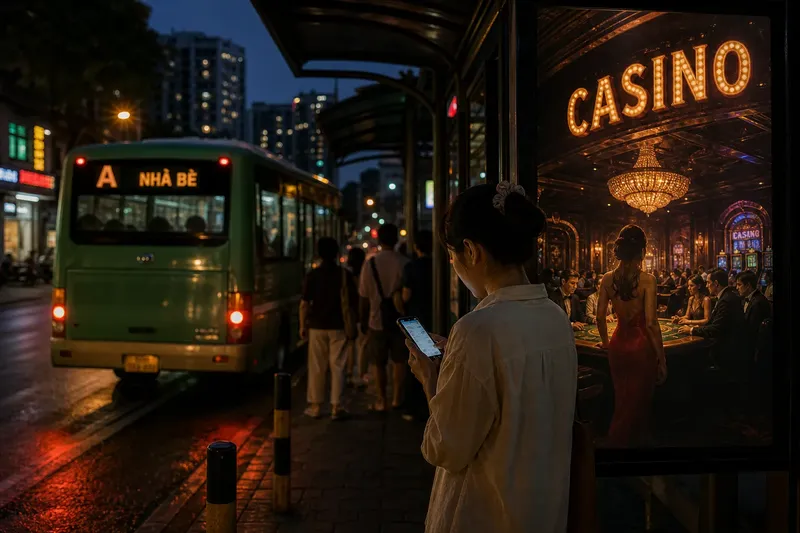
Often, it arrives as portable media: a promotional image in a social feed, a game streamed on a phone, or a discussion among passengers who already know one another. A screen makes casino imagery easy to carry, but it does not turn the pavement, bus stop or market passage into a casino space.
That distinction matters in a district shaped by daily journeys. The route supplies pauses and encounters; the casino reference comes from elsewhere, then gets interpreted through local routines, personal taste and the conversation at hand.
What does a commuter route add to the story?
A familiar route gives the casino idea a setting in everyday time. Someone may see a gaming clip while waiting for a connection, hear a friend mention an online game after work, or scroll past an advert on the way to an errand. Each moment is brief, and each belongs to a different person’s routine.
Public space also sets boundaries. Keep screens and conversations considerate of people nearby, respect rules on transport and at businesses, and do not assume that a shared stop invites promotion or play. A commuter route is for getting around, not for turning strangers into an audience.
How can you tell entertainment from an invitation to spend?
Casino culture includes more than gambling itself: it can mean visual motifs, films, games, stories about luck, and the social language surrounding risk. Online promotions may blur those distinctions by presenting betting as casual entertainment, so it helps to pause and notice what a message is asking you to do.
- Check whether a post is clearly marked as advertising; if it is, treat it as promotion, but if its source is unclear, do not assume it is neutral advice.
- Check whether a game involves staking money or valuable credits; if it does, recognise that financial risk is part of the activity, but if it does not, still read its rules before joining.
- Check whether a message urges immediate action; if it does, leave it until you can consider it calmly, but if it gives room to decide, assess it without pressure.
- Check whether the terms explain deposits, withdrawals and restrictions plainly; if they do not, avoid committing money, but if they do, read them carefully before making any decision.
- Check whether a conversation is welcome in the place you are using; if it is, keep it respectful, but if others need quiet or space, end it or move the discussion elsewhere.
- Check whether you are using time set aside for travel or another obligation; if so, put the screen away and attend to the journey, but if you have free time, choose entertainment that fits your own boundaries.
What questions help explain casino culture on the move?
Is a casino advert the same as casino culture?
No. An advert is a commercial message, while casino culture also includes imagery, entertainment, conversation and ideas about chance. Separating those layers makes it easier to see when a message is trying to sell something.
Why notice where a casino image appears?
Setting changes how a message feels: a clip seen during a commute is part of a passing screen moment, not evidence that the surrounding public place is a gambling venue. The distinction keeps discussion grounded in how people actually use shared routes.
Can a commuter conversation stay considerate?
Yes, if it suits the setting and the people involved. Keep voices and screens unobtrusive, and stop if someone is not interested or the space calls for quiet.
What if gambling starts to feel hard to control?
Step away from the activity and talk to someone you trust; for tailored support, contact a qualified health professional or a recognised local support service. Avoid making financial decisions under pressure, and seek professional advice if money worries are involved.
How might one journey make the distinction clear?
Imagine a commuter has a bus ride and sees a casino-themed game clip on a phone. They notice a promotional link, close it without following through, then message a friend about the clip as entertainment; when their stop approaches, they put the phone away and get off. The observable result is a clear separation between seeing casino imagery, choosing whether to engage with it and completing the everyday journey.
It is not worth trying to read a whole district’s character from one advert, one conversation or one passing screen. A more useful lens is to ask who is sharing the message, what action it invites and how it fits—or fails to fit—the purpose of the public space.
Casino culture along Nhà Bè’s commuter routes is best understood as something people encounter and interpret while moving through ordinary city life. Notice the source, respect the shared setting and keep the journey’s purpose in view; those small distinctions make the story clearer without confusing a screen with a place.